I asked Copilot this question: “Are there any stories out there that touch on the concept of a person being so worried or stressed about both the past and the future that they forget to be in the present?”
Copilot gave me a nice initial list. I read through the list and decided that I wanted to know which of these stories started out as novels. I also wanted to know, in addition to the inital list, if there were any other novels, short stories, or essays with similar themes; so I added that to my prompt.
Here are the results that Copilot provided:
Stories About Being Pulled Out of the Present
This page gathers all works initially discussed—novels, short stories, essays, and films—and integrates the full commentary, thematic framing, and descriptive notes. These selections explore the deeply human experience of being caught between the weight of the past and the anxiety of the future, often at the expense of living in the present.
Why This Theme Resonates
Many of these stories revolve around a familiar emotional pattern:
- Regret pulls characters backward.
- Anxiety pulls them forward.
- Presence becomes the thing they forget to practice.
Writers return to this tension again and again because it reflects a universal struggle: learning to inhabit the now while carrying the weight of what has been and what might be.
Core Works Initially Discussed
Novels
The Catcher in the Rye – J.D. Salinger
Holden Caulfield is stuck in grief over the past and terrified of adulthood. His inability to live in the present is the emotional core of the novel.
Slaughterhouse-Five – Kurt Vonnegut
Billy Pilgrim becomes “unstuck in time,” bouncing between past, present, and future. The structure itself mirrors the psychological experience of being unable to inhabit the present.
The Hours – Michael Cunningham
Three women in different eras wrestle with regrets, anxieties, and the weight of time. Their inner lives are dominated by everything except the moment they’re in.
The Midnight Library – Matt Haig
A woman explores alternate versions of her past and future, learning that meaning only exists in the present.
Additional Novels with Similar Themes
Mrs. Dalloway – Virginia Woolf
A single day in London becomes a swirl of memories, regrets, and imagined futures. Woolf captures how the mind drifts away from the present even while the body moves through it.
The Remains of the Day – Kazuo Ishiguro
A butler reflects on a lifetime of choices he can’t undo. His fixation on past duty blinds him to the emotional life he could still have.
Never Let Me Go – Kazuo Ishiguro
Characters are so shaped by what’s been withheld from them and what awaits them that they struggle to inhabit the present moment.
The Bell Jar – Sylvia Plath
Esther Greenwood is overwhelmed by expectations of the future and traumas of the past, making the present feel unreachable.
The Unbearable Lightness of Being – Milan Kundera
Characters wrestle with nostalgia, fate, and imagined futures, often missing the immediacy of their own lives.
Norwegian Wood – Haruki Murakami
A novel steeped in memory, grief, and the difficulty of living fully in the now.
The Time Traveler’s Wife – Audrey Niffenegger
Time travel becomes a metaphor for emotional absence—being physically present but mentally elsewhere.
The Ocean at the End of the Lane – Neil Gaiman
A man revisits childhood memories that blur reality and imagination, exploring how the past shapes the present.
Einstein’s Dreams – Alan Lightman
A series of dreamlike vignettes imagining worlds with different rules of time—many of them about the cost of not living in the moment.
Novellas
A Christmas Carol – Charles Dickens
Scrooge is dragged through his past and future, and the emotional whiplash blinds him to the life happening right in front of him. His entire arc is about rediscovering the present moment.
Short Stories
The Secret Life of Walter Mitty – James Thurber
Mitty escapes into fantasies (future possibilities) because he’s dissatisfied with his life, and he’s haunted by regrets. The story—and especially the film adaptation—is about waking up to the present.
The Dead – James Joyce
A masterclass in how memories and imagined futures can eclipse the present moment. The final scene is one of the most famous meditations on time in literature.
A Clean, Well-Lighted Place – Ernest Hemingway
Two waiters, one young and one old, reveal how differently people relate to time, regret, and meaning.
Babylon Revisited – F. Scott Fitzgerald
A man tries to reclaim his life after the mistakes of his past, but the past refuses to stay put.
The Swimmer – John Cheever
A surreal journey through a man’s life, regrets, and denial—disguised as a swim through suburban pools.
Essays and Philosophical Works
“Self-Reliance” – Ralph Waldo Emerson
Emerson argues that dwelling on past failures or future fears robs us of authenticity and presence.
Meditations – Marcus Aurelius
A surprisingly modern-feeling reminder that the only thing we ever truly have is the present moment.
“The Present” – Annie Dillard (from Pilgrim at Tinker Creek)
A luminous reflection on how easily we miss the now while chasing meaning elsewhere.
On the Shortness of Life – Seneca
A classic argument that life feels short because we waste so much of it on everything except the present.
Films (Included for Thematic Context)
Inside Out
Riley’s emotional turmoil comes from clinging to old memories and fearing the future. The film argues that emotional presence—even when painful—is essential.
Groundhog Day
Phil is forced to relive the same day until he finally stops obsessing about what he wants and starts actually being in the moment.
Closing Reflection By Copilot
Across genres and eras, these works illuminate the same truth: it is profoundly human to be pulled out of the present by the gravity of memory and the magnetism of possibility. These stories remind us that the present moment—fleeting, fragile, and easily overlooked—is where life actually happens.
Wallace D. Wattles had a little something to say about this topic, too, in Chapter 11 of his book, “The Science of Getting Rich”. I wrote a little bit about that in this post: Acting In The Certain Way
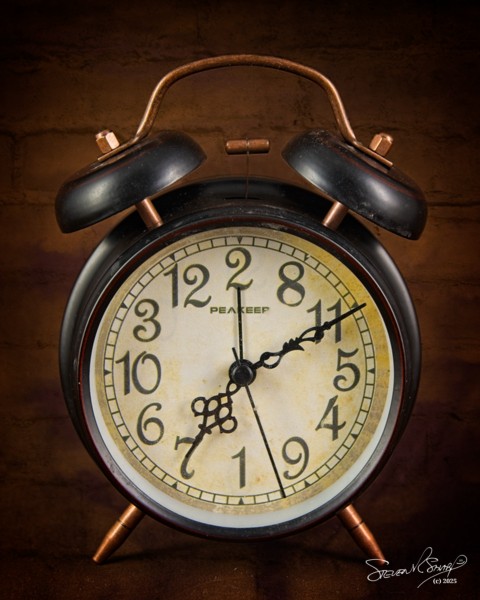
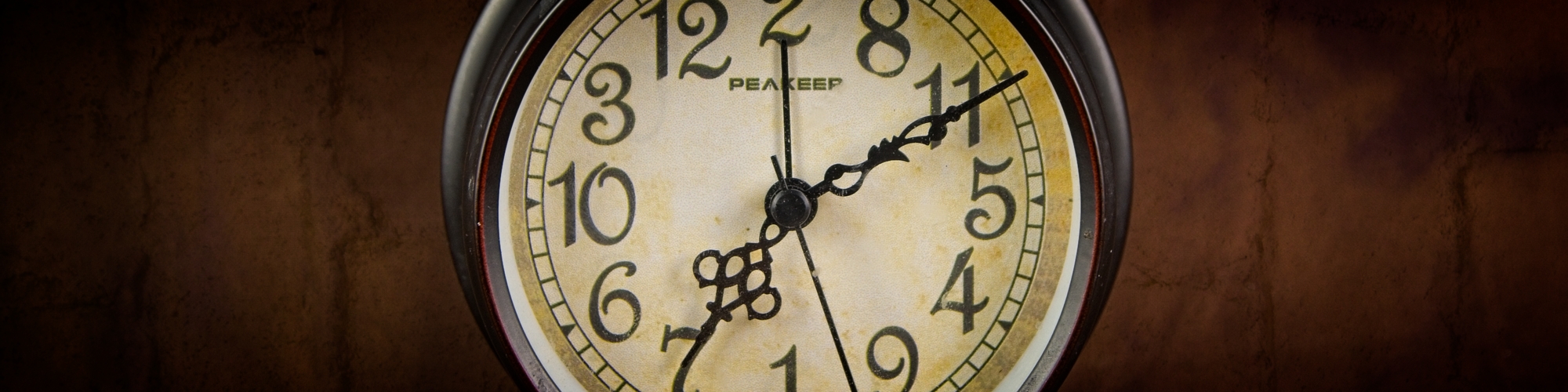
And here is a photo of a clock that I purchased at Savers for $3.00. After getting the clock home, I took it apart, photographed the face, loaded the photo into Photoshop, manipulated the image to rearrange the numbers, then put the clock back together with a newly printed face. Can you figure out the order of the numbers? Hint: It’s not random.